

Remote Sensing: Principles, Interpretation, and Applications
This book provides a foundational understanding of remote sensing, covering its core principles, data acquisition, and interpretation techniques. It explores various applications across different fields, serving as a valuable resource for students and professionals in geospatial science and related disciplines.
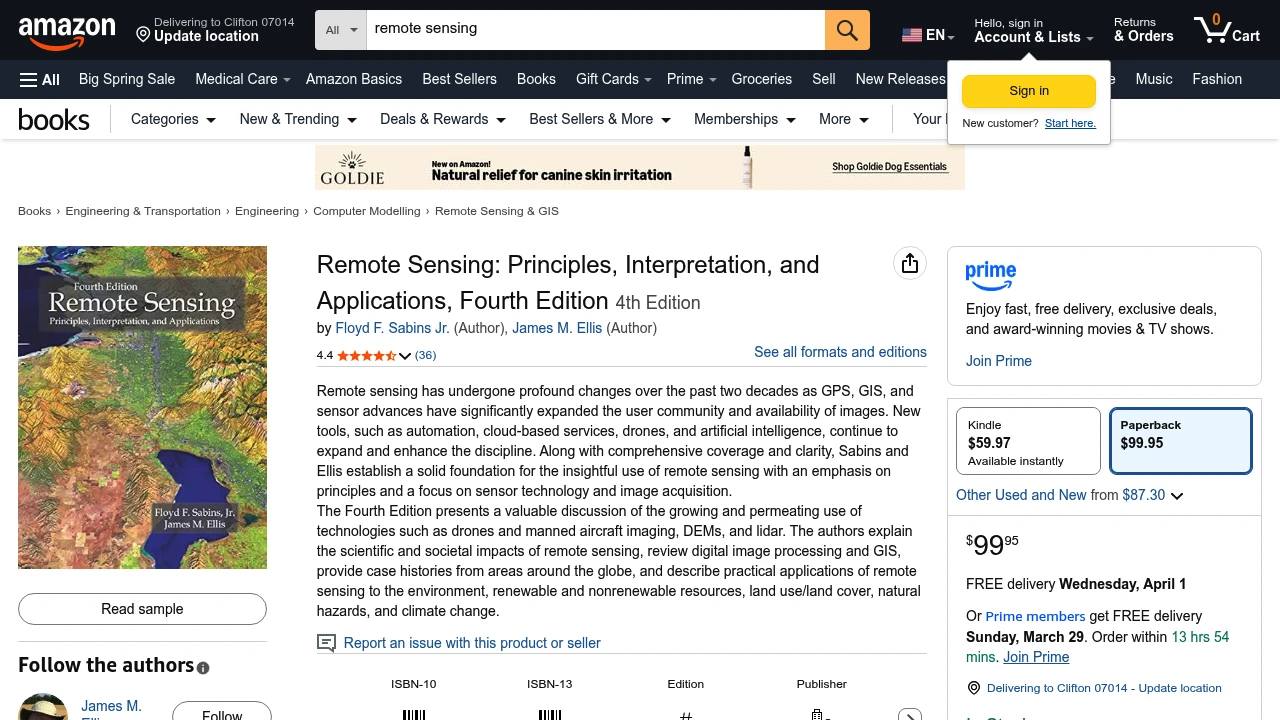
"Remote Sensing: Principles, Interpretation, and Applications," serves as a foundational textbook for individuals seeking to understand the complexities of remote sensing technology. It meticulously details the underlying physical principles, sensor systems, and data acquisition methods that form the bedrock of this field. The book aims to equip readers with a robust theoretical framework necessary for effective data analysis and application.
The publication delves into various aspects of image interpretation, including visual and digital analysis techniques. It covers different types of remote sensing data, such as optical, thermal, and radar imagery, explaining how these are processed and utilized to extract meaningful information about the Earth's surface. Practical examples and case studies are integrated to illustrate real-world applications.
This resource is designed for students, researchers, and professionals in geography, environmental science, urban planning, agriculture, and other disciplines that leverage geospatial data. It provides insights into how remote sensing can be applied to monitor environmental changes, manage natural resources, and support decision-making across a wide array of global challenges.
Tags:
Disclaimer: We do not guarantee the accuracy of this information. Our documentation of this website on Geospatial Catalog does not represent any association between Geospatial Catalog and this listing. This summary may contain errors or inaccuracies.